
The conversation around American industrial growth is changing. For several years, much of the attention has centered on investment announcements, domestic production targets, supply-chain resilience, and plans to expand manufacturing capacity. Those priorities remain important, but the market is moving into a more demanding phase.
Projects now have to move from intention to delivery.
The latest indicators illustrate that transition. According to the Federal Reserve’s June 2026 industrial production report, manufacturing output increased at a 4.7 percent annual rate during the second quarter, even though it was unchanged in June. Meanwhile, the U.S. Census Bureau reported that total construction spending during the first six months of 2026 was 3.5 percent below the comparable period in 2025. These figures point to a market with real industrial momentum, but also uneven construction conditions and greater pressure on projects to demonstrate that they are ready to advance. (Federal Reserve)
Electricity demand is adding another layer of complexity. The U.S. Energy Information Administration expects U.S. electricity load to increase by 1.9 percent in 2026 and 2.5 percent in 2027. After years in which electricity consumption remained comparatively stable, industrial developers are operating in an environment where generation, equipment, utility capacity, and energy planning are becoming more consequential to project schedules and long-term operations. (U.S. Energy Information Administration)
These conditions do not signal a shortage of industrial opportunity. They show that opportunity is becoming more selective. Market demand, capital, and a promising project concept are not enough on their own. Industrial growth increasingly depends on whether an organization can coordinate infrastructure, engineering, construction, commercial decisions, and operations into a system that performs reliably over time.
This is where BaRupOn’s role becomes most relevant. BaRupOn develops and operates the infrastructure, systems, and industrial capability required to move complex projects from concept to long-term performance.
The Market Is Moving Beyond Announcements
Industrial projects often begin with a clear commercial objective. A company identifies a market need, selects a product or operating model, evaluates potential locations, and develops an investment case.
The challenge begins when that objective has to be translated into physical and operational requirements.
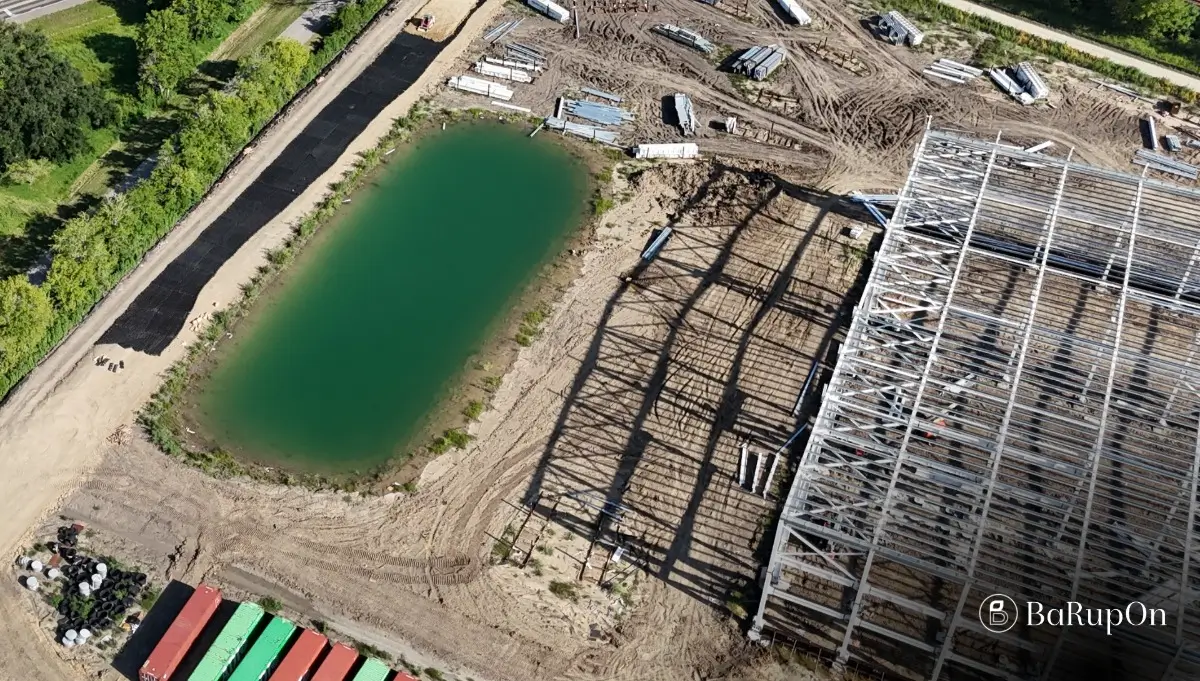
Before construction can advance responsibly, the project must establish realistic needs for power, water, transportation, utilities, equipment, permitting, contractors, logistics, safety, and future operations. Those requirements must then be converted into engineering packages, procurement strategies, construction sequences, commissioning plans, and clearly assigned responsibilities.
A project can attract capital and still lack a practical path to operation. A site can appear suitable until its utility requirements are examined in detail. Equipment may be technically available but incompatible with the required schedule. Construction may begin while critical interfaces between engineering disciplines remain unresolved. Commercial commitments may advance before operating assumptions have been fully tested.
As infrastructure and execution resources become more constrained, those gaps become harder to absorb. Projects are competing for electrical equipment, specialized machinery, qualified contractors, experienced engineers, and personnel capable of operating complex industrial systems.
The next stage of industrial growth will therefore be shaped less by the number of projects announced and more by the number that can establish a credible path from planning through operation.
Infrastructure Requirements Must Become One Coordinated System
Industrial facilities depend on multiple infrastructure systems, but those systems cannot be developed effectively as separate projects.
Power decisions influence equipment configuration, operating continuity, site layout, redundancy, capital requirements, and future expansion. Water planning affects storage, treatment, drainage, process compatibility, environmental controls, and operating reliability. Transportation planning affects construction access, equipment delivery, material movement, workforce circulation, emergency response, and routine logistics.
Utilities, communications, safety systems, industrial equipment, and future development areas introduce further dependencies. A decision in one area can affect several others.
BaRupOn’s approach begins with those relationships. The objective is not simply to provide every required system. It is to ensure that those systems are coordinated around the operating requirements of the development.
That requires responsibility for the boundaries between disciplines.
A revised equipment package may change structural loads, utility connections, access requirements, installation sequencing, and commissioning procedures. A delayed electrical decision may affect procurement, field productivity, testing, and the date operations can begin. A drainage revision may influence road elevations, foundations, utility corridors, and later construction phases.
When these effects are handled independently, the project becomes vulnerable to rework, delays, cost escalation, and operating limitations. When they are managed as part of one development system, infrastructure becomes a platform for industrial capability rather than a collection of disconnected assets.
Execution Capacity Is Becoming a Competitive Advantage
Land, capital, and market demand remain important industrial resources. Organizational execution capacity is becoming equally important.
Execution capacity is the ability to define scope, make informed decisions, maintain technical oversight, manage contractors, control changes, track procurement, identify emerging risks, and preserve accountability throughout several years of work.
These capabilities are tested when assumptions change.
Suppliers revise schedules. Field conditions challenge early studies. Equipment requirements develop. Regulatory reviews introduce new information. Commercial priorities evolve. Construction teams encounter interfaces that were not fully resolved during design.
A capable organization does not eliminate change. It establishes a disciplined process for understanding, approving, documenting, and managing it.
For BaRupOn, that means connecting engineering, procurement, construction, finance, safety, reporting, and operations through a common project structure. Each function needs visibility into the decisions and dependencies affecting its work. Leadership needs reporting that explains not only what has been completed, but also what remains unresolved and what could affect the next stage.
A schedule can show planned dates. Effective project control must also show engineering maturity, procurement status, field progress, cost exposure, decision ownership, commissioning readiness, and operational risk.
This focus is becoming increasingly relevant as manufacturers look for stronger productivity and greater output from their existing resources. The U.S. Bureau of Labor Statistics reported that manufacturing-sector labor productivity increased 3.2 percent during the first quarter of 2026, with output rising 3.3 percent. Separate BLS analysis found that manufacturing productivity began rebounding in 2025 after a prolonged period of weaker performance. (Bureau of Labor Statistics)
Productivity does not come from equipment alone. It depends on how effectively infrastructure, technology, people, procedures, maintenance, and operating systems work together.
Long-Term Operations Begin During Development
Physical completion does not automatically create a functioning industrial asset.
Before a facility can perform reliably, systems must be tested, documented, commissioned, transferred, maintained, and understood by the people responsible for operating them. Equipment records must reflect what was installed. Operating procedures must match actual site conditions. Maintenance requirements must be established. Personnel must be trained. Unresolved construction issues must be identified, assigned, and closed.
When operations are treated as a final-stage concern, a project can reach substantial completion without being fully prepared to perform.
BaRupOn’s long-term operating perspective brings those considerations into development decisions earlier. Maintainability, equipment access, isolation points, replacement routes, spare-parts planning, supplier support, technical documentation, and workforce preparation all influence whether an industrial system can remain dependable after commissioning.
The transition from construction to operations is therefore not a simple administrative handoff. It is one of the most important stages in the project lifecycle.
It is also where organizational continuity becomes critical. Industrial developments accumulate thousands of technical decisions. When the reasoning behind those decisions is lost as consultants, contractors, and project personnel change, operating teams can inherit systems without fully understanding their limits, dependencies, or intended performance.
Long-term capability requires continuity between the people who define the project, those who engineer and build it, and those responsible for its operation.
Growth Must Be Scalable Without Becoming Uncontrolled
Many industrial developments advance in phases. Phased execution can align capital deployment with demand, reduce unnecessary early exposure, and allow operating experience to improve later work.
It also introduces additional complexity.
Future construction may need to proceed around active infrastructure and operating facilities. New utility connections must be introduced without disrupting existing systems. Construction traffic must remain separated from normal operations. Expansion areas and connection points must be protected before they are needed. Safety procedures must address both active operations and continuing construction.
Scalability therefore means more than making a development larger. It means expanding without losing control of safety, reliability, technical standards, reporting, or operational continuity.
Each phase should strengthen the platform supporting the next one. Engineering lessons should improve later designs. Procurement experience should sharpen supplier requirements. Field findings should improve construction planning. Operating data should inform future infrastructure decisions.
Industrial scale is created through repeatable organizational systems that can adapt to changing conditions while preserving control.
Turning Industrial Momentum Into Long-Term Performance
The industrial market is entering a period in which execution will increasingly separate credible developments from ambitious proposals.
Manufacturing activity is showing areas of strength, but construction conditions remain uneven. Electricity demand is increasing, and projects are competing for infrastructure, equipment, technical talent, and qualified execution teams. Under these conditions, industrial growth requires more than capital and intent.
It requires an organization capable of converting complex requirements into a coordinated operating system.
That is the role BaRupOn is structured to perform.
BaRupOn develops and operates the infrastructure, systems, and industrial capability required to move complex projects from concept to long-term performance. Its work is concentrated in the difficult space between an industrial idea and a functioning operation: defining requirements, coordinating technical disciplines, managing execution, preserving organizational knowledge, preparing for operations, and remaining responsible as projects grow.
As industrial investment moves further from announcement into delivery, this capability will become more valuable. The organizations that create durable industrial growth will not simply be those that begin the most projects. They will be the companies capable of making complex industrial systems executable, operable, scalable, and reliable for decades.