

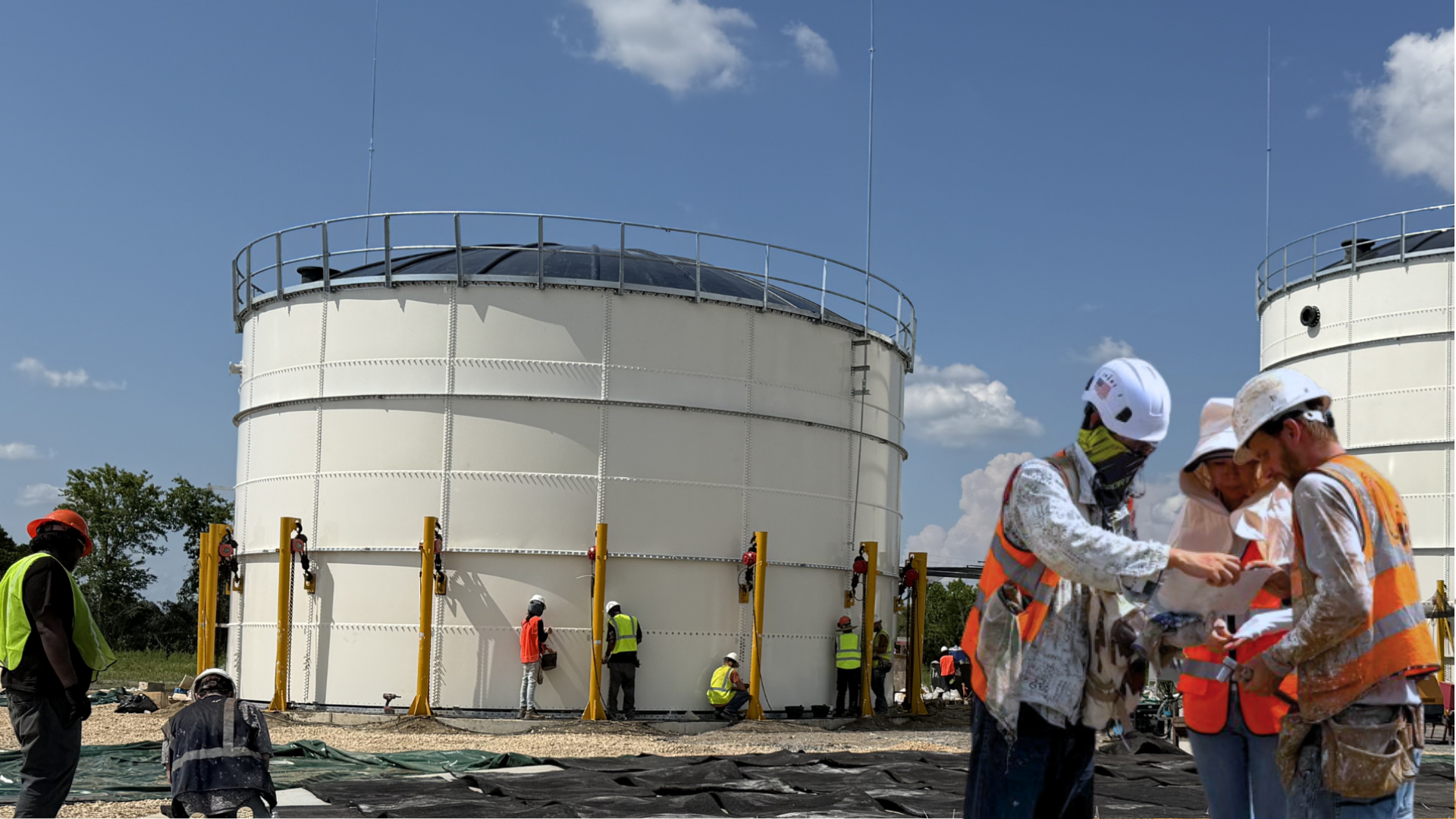
Industrial development once began with land.
A site was selected, buildings were designed, approvals were pursued, and power was addressed as part of the construction process. For many projects, that sequence was workable because energy requirements were more predictable and utility capacity could often be delivered within a conventional development timeline.
That is changing.
Today, some of the most important decisions are being made before a final site plan is completed. Developers are evaluating power generation, transmission capacity, interconnection timelines, utility coordination, and regulatory requirements years before construction begins.
A recent Data Center Knowledge article featuring Balaji Tammabattula, Chief Operating Officer of BaRupOn, offers a timely example of this shift.
The article examines Meta’s planned 1-gigawatt campus in Alberta, Canada. But the broader lesson is not limited to one company or one industry. It is that large-scale development increasingly begins with a credible infrastructure strategy.
Data Center Knowledge Highlights a Change in Project Planning
Meta’s planned Alberta campus represents an investment of more than US$9 billion. The project is expected to support approximately 3,000 construction jobs at peak and more than 300 permanent operational positions. It also includes approximately US$42.3 million in planned road and water infrastructure investment.
The scale of the project is significant, but the planning behind it is just as important.
According to Data Center Knowledge, Meta worked with power suppliers, transmission organizations, and Alberta’s electric system operator years before the project was publicly announced. Generation, transmission, utility coordination, and regulatory engagement were not treated as later-stage requirements. They were central to determining whether the development could move forward.
This reflects a broader change across industrial development.
A public announcement may be the first time a project becomes visible, but it is rarely the beginning of the work. By that point, developers may already have spent years reviewing power availability, negotiating energy arrangements, studying transmission requirements, and coordinating with utilities and regulators.
That early work is becoming one of the clearest indicators of whether a project is truly ready to advance.
Power Is Reshaping Site Selection
Land, workforce, transportation, water, and permitting conditions remain essential to industrial development.
But none of those advantages can fully compensate for an uncertain power pathway.
Modern industrial operations rely on electricity for production equipment, automation, robotics, process controls, environmental systems, communications, testing, and quality assurance. For larger projects, those requirements may also involve new generation, transmission improvements, utility upgrades, and long-term capacity planning.
This is why power is increasingly influencing site selection before final design begins.
Balaji explained the challenge in Data Center Knowledge:
“Grid interconnection and transmission upgrades are measured in years, and in some jurisdictions the queue itself is the bottleneck before a single permit is filed. That’s why you’re seeing developers negotiate power agreements before they’ve finalized site plans.”
The point is not simply that projects need more electricity.
The larger issue is timing.
A site may offer sufficient acreage and strong transportation access, but if the required power cannot be delivered for several years, the project may not be able to operate on the schedule investors, manufacturers, or communities expect.
Developers therefore need to understand more than the amount of power that may eventually become available. They need a realistic view of generation, transmission, interconnection, cost, regulatory approval, and future expansion.
A development-ready site is no longer defined only by what can be built there.
It is defined by whether the infrastructure required to operate there can be delivered.
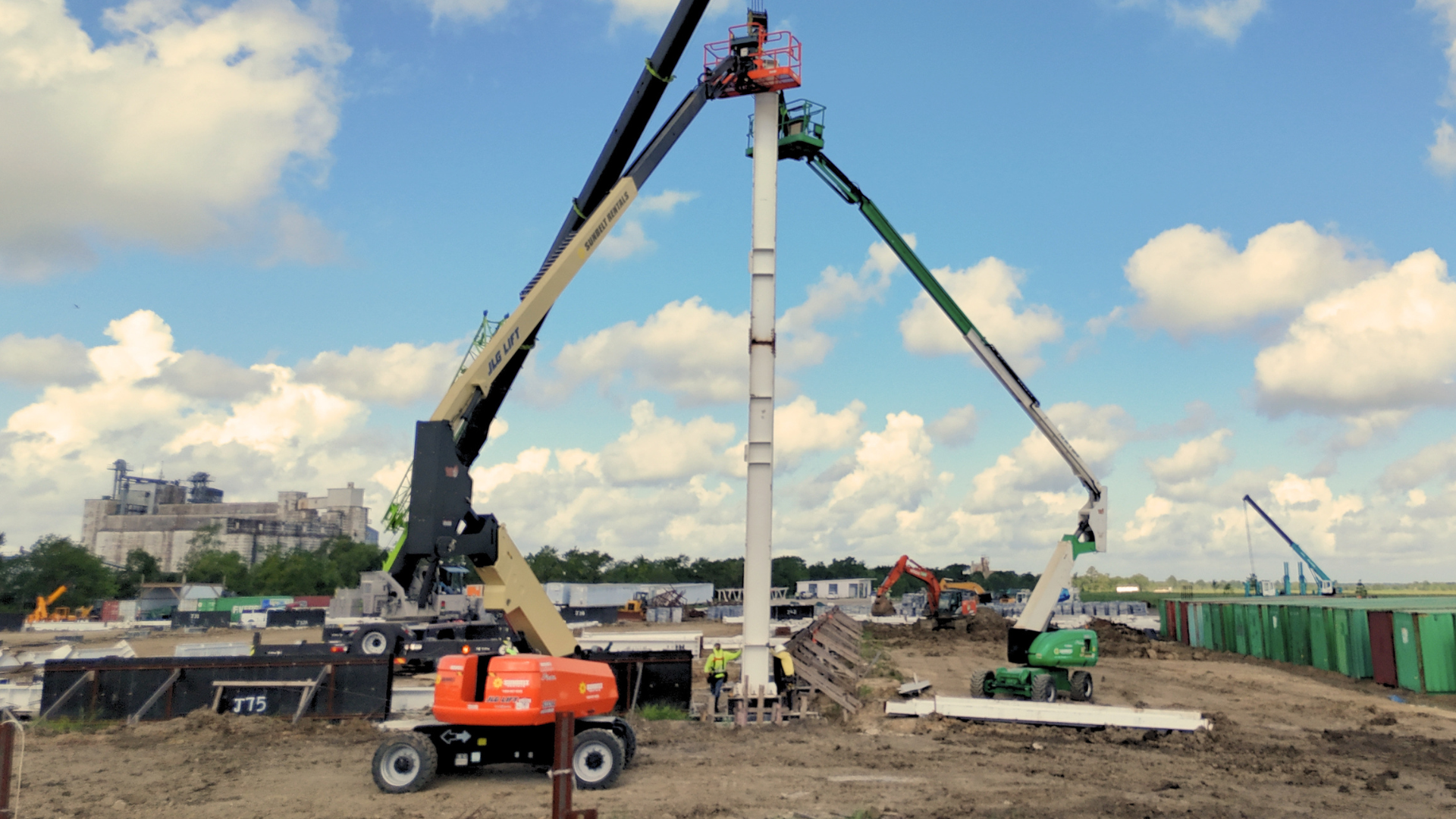
Utility Engagement Now Begins Years Earlier
The timing of utility engagement has also changed.
In the past, detailed power discussions could begin relatively close to construction. For many projects, six to twelve months of coordination may have been enough to confirm service requirements and complete the final connection.
That approach is becoming less practical for developments with substantial or rapidly growing energy needs.
“We’ve seen that engagement move from what used to be a six- to 12-month conversation right before construction, to something that now starts three to five years out,” Balaji said.
Starting earlier changes the quality of the planning process.
Utilities have more time to study the proposed load and evaluate system requirements. Transmission organizations can identify potential upgrades. Developers can compare energy strategies before committing to a location. Regulators and local governments can better understand the project’s infrastructure needs.
It also allows the development plan to reflect actual conditions.
Instead of assuming capacity will be available, developers can build their schedules around realistic interconnection timelines. Instead of designing the full site first and adjusting later, they can phase construction according to when power, water, roads, and other systems can be delivered.
Early engagement does not remove complexity.
It gives the project enough time to manage it.
Infrastructure Planning Extends Beyond Electricity
Power may be the first major constraint, but it is part of a larger system.
Industrial projects also depend on water, transportation, communications, drainage, emergency services, workforce resources, and supporting utilities. These systems are often closely connected.
A manufacturing process may change both power and water demand. A generation strategy may affect fuel infrastructure. Construction phasing may determine when roads and utilities need to be completed. Site expansion may require additional emergency response capacity or regional infrastructure improvements.
When these systems are planned separately, conflicts can appear late in development.
A project may discover that the power schedule does not match the construction schedule. A facility may be designed around water or utility assumptions that cannot be delivered. A later phase may require infrastructure that the original site plan did not anticipate.
Integrated planning helps identify those issues earlier.
It allows power, water, transportation, utilities, and construction to be evaluated as parts of one operating environment rather than as separate checklist items.
This is especially important for projects intended to grow in multiple phases. Infrastructure designed only for the first building may create limitations once additional facilities, equipment, or industries are added.
Long-term development requires systems that can expand with the project.
The Lesson Goes Beyond Data Centers
The Data Center Knowledge article focuses on a major AI infrastructure campus, but the planning principles apply across industrial sectors.
Advanced manufacturing facilities require reliable power for precision machinery, automation, environmental controls, inspection, and testing.
Chemical and materials operations depend on coordinated electricity, natural gas, water, storage, transportation, and safety infrastructure.
Semiconductor facilities require highly reliable energy, specialized utilities, water systems, and controlled production environments.
Energy projects need transmission access, fuel supply, permitting, storage, and long-term operating support.
Logistics and industrial campuses rely on roads, communications, utilities, emergency services, suppliers, and workforce availability.
The needs vary by industry, but the underlying reality is the same.
A building does not create an operating facility on its own.
Infrastructure does.
That is why industrial development is becoming more ecosystem-focused. Developers are increasingly considering how energy, utilities, manufacturing, transportation, workforce, and future expansion can function together rather than planning each element independently.
For BaRupOn, this is a central part of how industrial development should be approached.
The company focuses on integrated industrial ecosystems where power, water, transportation, utilities, manufacturing readiness, and long-term growth are considered from the beginning.
The objective is not simply to prepare a site for construction.
It is to create an environment in which industries can operate reliably and expand over time.
Execution Happens Before the Groundbreaking
Industrial projects are often measured by visible progress.
A site is announced. Renderings are released. Construction equipment arrives. Buildings begin to rise.
But the work that determines whether those milestones can lead to operations is often less visible.
It includes load studies, transmission reviews, utility negotiations, regulatory coordination, infrastructure design, and construction phasing. It requires developers to understand how much capacity is needed, when it is needed, and what must happen before it can be delivered.
Balaji described this work directly:
“Power capacity cannot scale fast enough. The companies willing to build or secure their own generation, and do the unglamorous work of transmission planning and regulatory coordination years ahead of need, are the ones who will be able to scale.”
That distinction matters.
A project can have land without having an energy strategy. It can have a building design without having an executable utility plan. It can have a public announcement without having resolved the infrastructure required for long-term operations.
Execution begins when those difficult questions are addressed.
Not after construction starts.
Before it becomes urgent.
Infrastructure Certainty Is Becoming a Competitive Advantage
Early infrastructure planning creates value for everyone involved in a project.
Investors gain a clearer view of development risk, cost, and schedule. Utilities gain time to study demand and evaluate system needs. Governments and economic development organizations can better understand how a project may affect regional infrastructure.
Communities also gain more time to prepare for potential changes in roads, water systems, emergency services, and workforce demand.
For manufacturers and industrial operators, the benefit is greater confidence that facilities can begin operating when expected.
That confidence is becoming a competitive advantage.
Projects with a credible power strategy, realistic infrastructure schedule, and coordinated development plan are better positioned to move through financing, permitting, construction, and expansion.
The advantage is not only speed.
It is predictability.
Developers who understand infrastructure requirements early can make better decisions about location, phasing, capital investment, and long-term growth.
Why This Matters Now
Industrial demand is growing while infrastructure timelines are becoming more complex.
Manufacturers are expanding domestic capacity. Energy-intensive operations are increasing. Supply chains are being restructured. Communities are competing for new investment while also evaluating how growth will affect existing infrastructure.
At the same time, generation, transmission, and utility systems cannot always expand at the pace projects would prefer.
This makes early coordination increasingly important.
Projects that delay infrastructure planning may enter long interconnection queues, encounter unexpected upgrade requirements, or discover that their development schedule was based on capacity that cannot be delivered on time.
Projects that begin earlier have more opportunity to identify constraints and develop realistic alternatives.
The Meta Alberta project is one example of this broader shift.
Balaji’s comments in Data Center Knowledge make the industry lesson clear: power strategy is no longer a supporting function within development.
It is becoming part of the foundation.
BaRupOn’s Perspective
BaRupOn approaches industrial development from the perspective of an infrastructure company actively planning integrated systems.
The company’s work is built around a straightforward principle: infrastructure enables industry.
Power, water, utilities, transportation, manufacturing readiness, construction phasing, and long-term operations must be considered together if a project is expected to grow successfully.
Balaji’s perspective reflects this approach.
The most credible developments are not necessarily those with the earliest announcement or the most ambitious rendering. They are the projects that begin utility engagement, transmission planning, generation strategy, and regulatory coordination early enough to support execution.
This is how long-term industrial capacity is created.
Not by treating infrastructure as a final connection.
By making it the first development decision.
Planning Infrastructure for Long-Term Industrial Growth
The sequence of industrial development is changing.
Power generation, transmission capacity, utility coordination, and regulatory planning are moving ahead of final site design and construction.
Land remains important, but land alone does not create industrial readiness.
A successful project requires a credible path to power, water, transportation, utilities, workforce resources, and future expansion. Those systems must be planned early enough to support both initial operations and long-term growth.
The Data Center Knowledge feature on Meta’s Alberta campus provides a timely example of this shift.
Balaji Tammabattula’s insights reinforce the broader lesson: projects that begin infrastructure planning early are better positioned to move from public announcement to actual operation.
Because industrial development no longer begins with the building.
It begins with the systems that make the building possible
Learn More About BaRupOn
Explore how BaRupOn plans integrated infrastructure, energy systems, and industrial ecosystems designed to support advanced manufacturing and long-term industrial growth.
Readers can also view the full Data Center Knowledge article, “Meta’s First Canadian AI Campus Was Planned Around the Grid,” for additional insight into Balaji Tammabattula’s perspective on power, transmission, and early infrastructure planning